


Why I Still Show Up in Feminist Spaces
Lucy and a cross section of members of FIDA Uganda. She serves as the BOD as vice chairperson (2023 - 26)
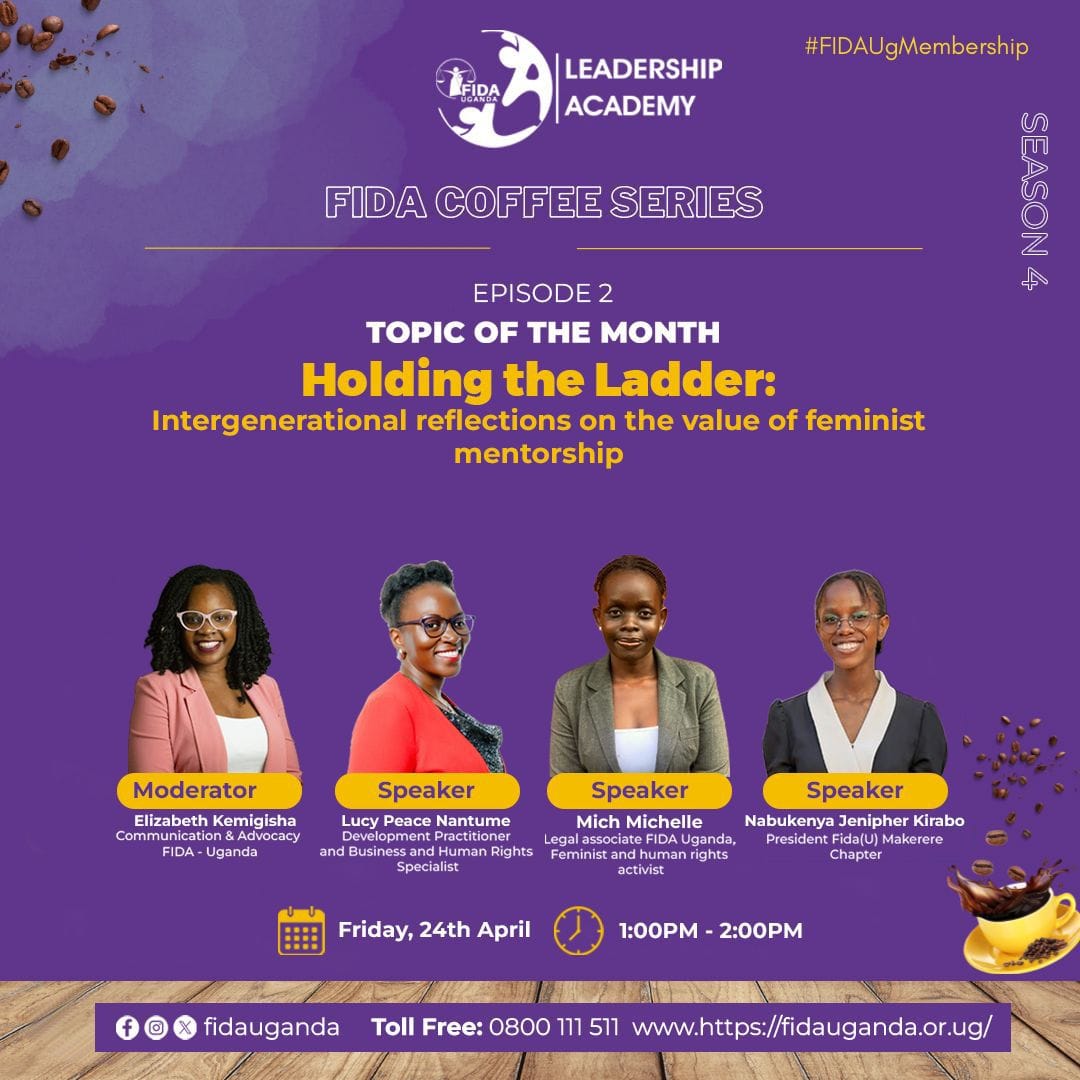
Yesterday, I had the privilege of speaking at an intergenerational conversation on mentorship, exploring how it is opening doors, strengthening feminist legal practice, and equipping young women to navigate the profession with confidence and purpose through the FIDA Uganda Leadership Academy.
At 40 years, I was the eldest on the panel, and I carried that with both honour and responsibility.
Time really does move. I blinked and went from being the young one in the room to the one expected to share wisdom. Life has a way of quietly promoting you without a formal announcement.
But I will be honest, my presence in that space has not been without reflection. In fact, it has come with quiet questions, both from within and from those who know me from other spaces I occupy as an advocate for married life and as a woman of faith.
“How do you sit in feminist spaces given your views?”
“Do you agree with everything feminism stands for today?”
These are valid questions and after yesterday’s conversation, I feel even more compelled to answer them.
The Feminism I Stand In
At its core, I believe that women and girls should have equal rights and the same opportunities as men. That is the basic definition of feminism and it is not abstract for me.
I have seen what happens when women lack access, when their voices are dismissed, when systems are not designed with them in mind. I have worked in spaces where deliberate effort was required to ensure that women get to the table and engage meaningfully.
That work matters and it must continue.
Feminism is a movement that takes different shapes. It is shaped by people and by the contexts we live in. This explains the divergences in its application. Yet, through its many evolutions, it holds one central goal: pushing societies towards equality for all women and girls and in turn, shaping a more equal world for everyone.
Like any label, some people proudly identify as feminists, while others hold feminist values but choose not to use the label. I belong to the latter.
Why Feminism? Is It Still Relevant?
I have been asked these questions, usually by fellow women, some of whom have had the privilege of living in societies where there has been progress in creating opportunities for women.
I invite such women to open their eyes to the world around them.
In most societies, men’s perspectives, needs, and preferences have historically shaped many of the systems, laws, and rules, both formal and informal, that govern our lives. These unequal power dynamics continue to tip the scales in favour of men and boys.
Feminism remains as relevant as ever because no country in the world has fully achieved gender equality.
Violations against women are still rampant:
One in three women experience physical or sexual violence in their lifetime
One in five girls are married before the age of 18
Six in ten femicides are committed by a woman or girl’s family member or intimate partner
Women hold less than two-thirds of the legal rights of men
In half of all countries, consent is still not the legal standard for rape
This is why the conversation must continue.
Where I Struggle
There are expressions of feminism that I struggle to align with. I am uncomfortable with ideologies that suggest that strength requires disconnection.
Disconnection from men
Disconnection from marriage
Disconnection from the beauty of complementarity
That version of feminism feels incomplete to me.
I believe in the interdependence of the sexes. I believe that men and women are not competitors, but partners and that we do not rise by diminishing one another, but by recognising the unique and shared value we each bring.
Equality, in my view, does not mean sameness and empowerment does not mean isolation. It means we stand fully in who we are, while still acknowledging that we need each other.
As a woman of faith, I cannot separate my worldview from what I believe about creation and purpose. I believe that both man and woman were created with intention. That dignity is inherent, not earned and that relationship, whether in family, community, or society, is part of how we flourish.
So when I speak about women thriving, I am not speaking about women standing alone.
I am speaking about women who are whole, grounded in identity, anchored in purpose, and capable of building meaningful, life-giving relationships.
Why I Still Show Up
So why do I still show up in feminist spaces? Because leaving does not shape the conversation. Showing up does.
I show up:
To offer a voice that holds both conviction and balance
To affirm young women without pushing them toward extremes
To remind us that empowerment and wholeness are not mutually exclusive
Yesterday, as I listened to the younger voices on the panel; bold, thoughtful, hopeful, I was reminded that these spaces matter. Not because they are perfect, but because they are shaping something.
So yes, I will continue to show up.
Not because I agree with everything said in the room, but because I believe there is space for voices like mine. Voices that believe in equality and in relationship, in purpose and in wholeness.
To the Young Women
You do not have to inherit every version of feminism that you encounter. You can think, question and choose.
You can pursue excellence in your career and still desire love, marriage, and family.
You can be strong and still be deeply relational.
You can advocate for justice without losing your sense of identity or your values.
These are not contradictions.
They are signs of wholeness.
An Invitation to Journey Deeper
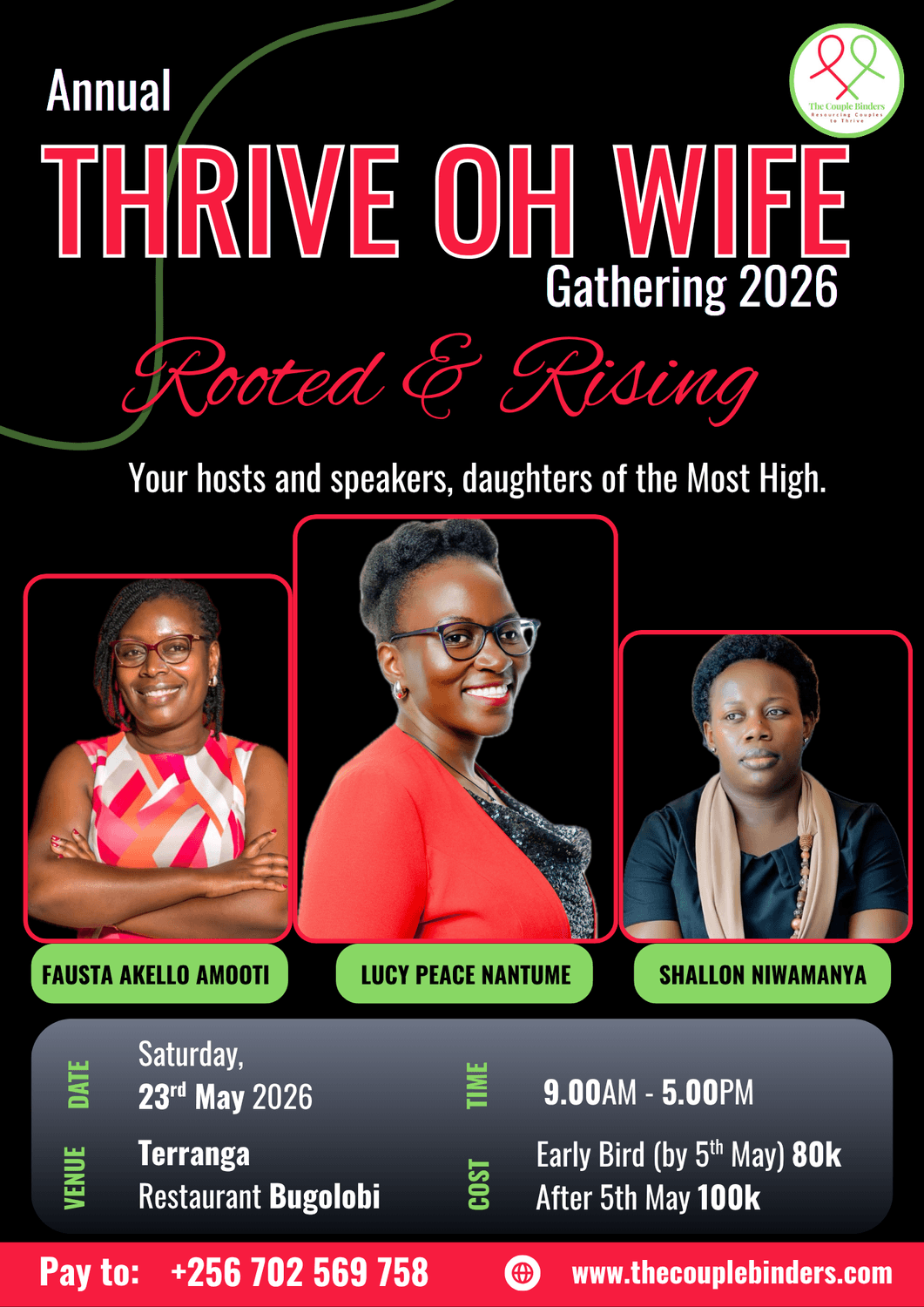
On my 40th birthday, 19th May 2025, I made a decision to become more intentional about creating spaces where women can grow in wholeness and purpose.
That is how Thrive Oh Wife 19 was born, under our work at The Couple Binders.
For the past year, I have shown up consistently every 19th of the month, walking a journey with women through online conversations and weekly engagements on a WhatsApp platform. What started as a simple gathering has grown into a deeply reflective and transformative space.
Along the way, the questions, desires, and real-life struggles shared by the women led me to develop a deeper, more structured journey, an 8-week programme called More Than a Wife.
It is a deeply intentional online programme designed to help women reconnect with who they truly are, not apart from marriage, but deeply within it and far beyond it.
We journey together through identity, healing, purpose, stewardship, womanhood, and divine balance.
You may ask, why a focus on women?
Because women carry so much: families, communities, careers, expectations and yet often neglect their own formation. When women are grounded, healed, and clear, they don’t just survive, they transform spaces.
When a woman is whole, everything around her is impacted.
Join Us.
As we celebrate one year of Thrive Oh Wife 19, we are taking this conversation from online to in-person. I invite you to join us on 23rd May 2026 for the Annual Gathering.
If you know there is more in you, and you are ready to grow intentionally, this space is for you. If this message resonates with you, if you desire more depth, more clarity, more intentional living, I invite you to be part of the spaces.

Lucy Peace Nantume
Co-founder – The Couple Binders
Lucy is a wife, mother, daughter, and friend striving to serve God with her whole life. She is a lawyer with expertise in human rights. Together with her husband, Ronald Kazibwe, they are passionate about helping couples to thrive in their marriages. They are “The Couple Binders.” Visit their website www.thecouplebinders.com for more details about them and what they do.
About this blog
Welcome to The Couple Binders, your one-stop space for building a happy and fulfilling relationship!

+256 702 569 757

thecouplebinders@gmail.com

Location: Kira Municipality
Wakiso District,
Uganda.